The Brief
Following the successful launch of Vortevia's core marketing platform, the team set out to bring its autonomous content engine directly into the Shopify ecosystem. The goal: allow e-commerce store owners to turn their product catalog into high-ranking search content without hiring an agency or spending hours writing.
The primary hurdle in the Shopify App Store is churn at install. Most merchants install an app, encounter a dense multi-tab dashboard or open-ended configuration prompts, and uninstall within minutes. For an AI application, merchant skepticism runs even higher—store owners fear robotic copy that damages their brand reputation.
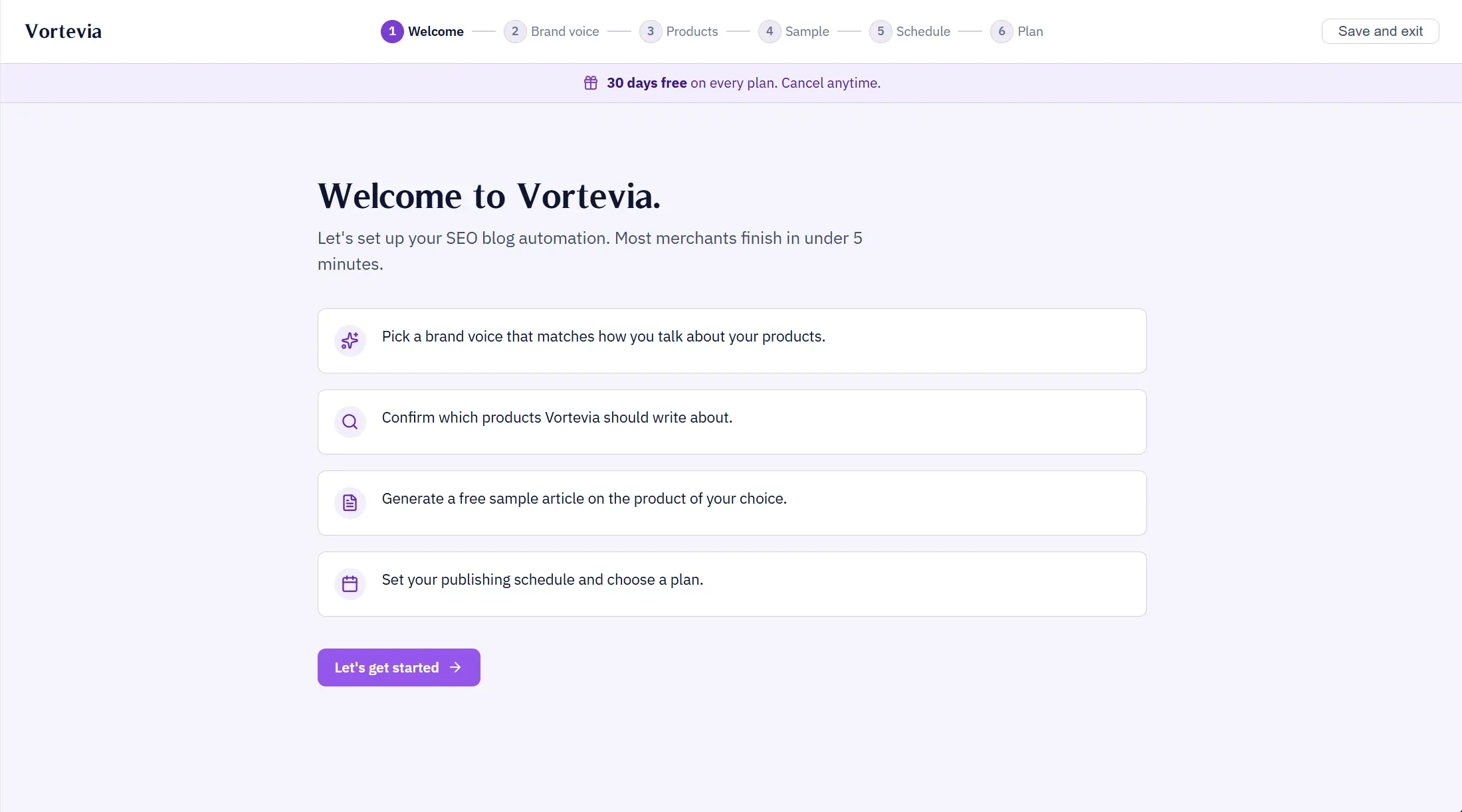
Altreonix was commissioned to design and engineer the complete Shopify application experience. We architected a guided 6-step onboarding funnel that delivers a fully formatted, brand-aligned sample article on the merchant's real inventory before asking for a subscription.
Editorial Voice & Guardrails
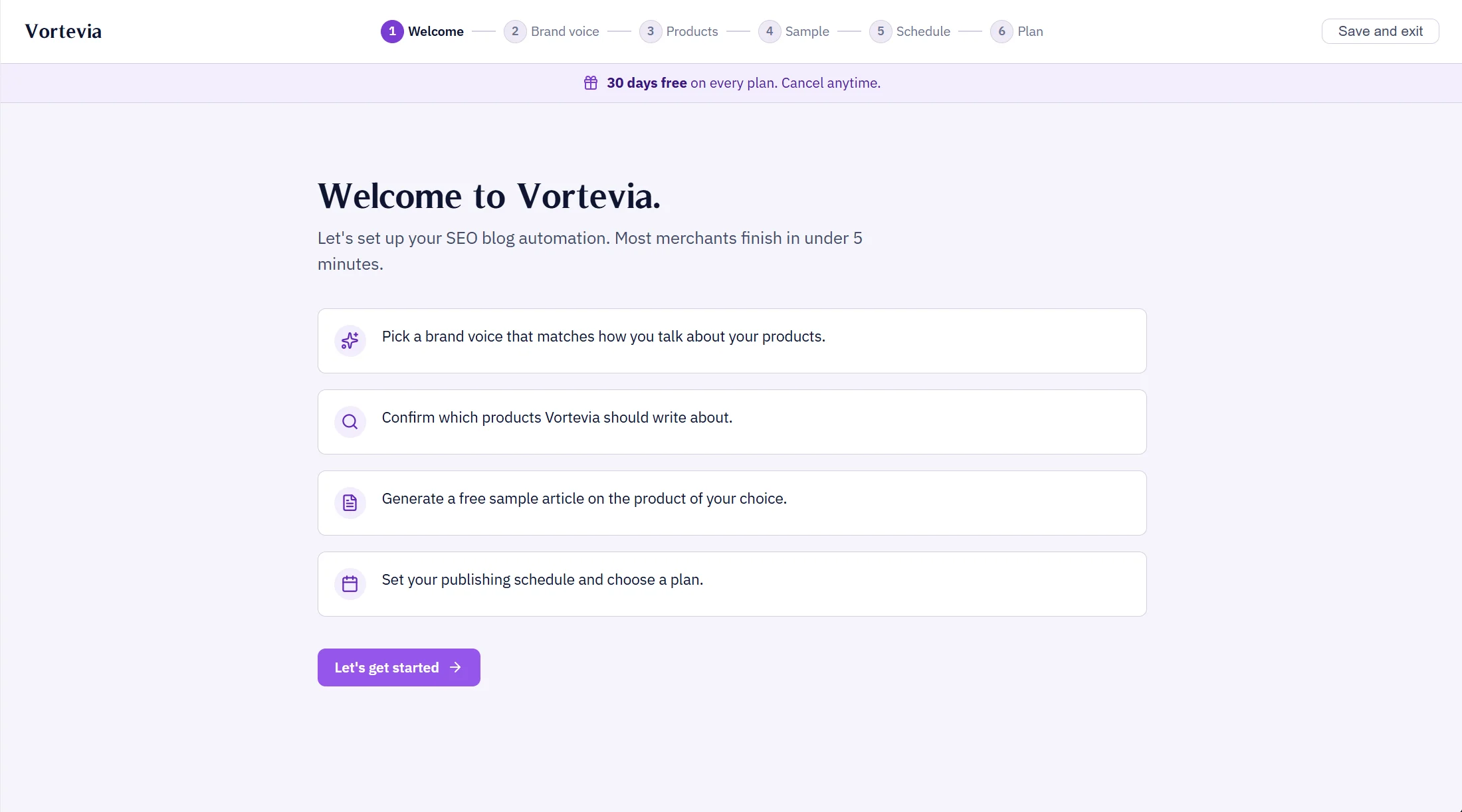
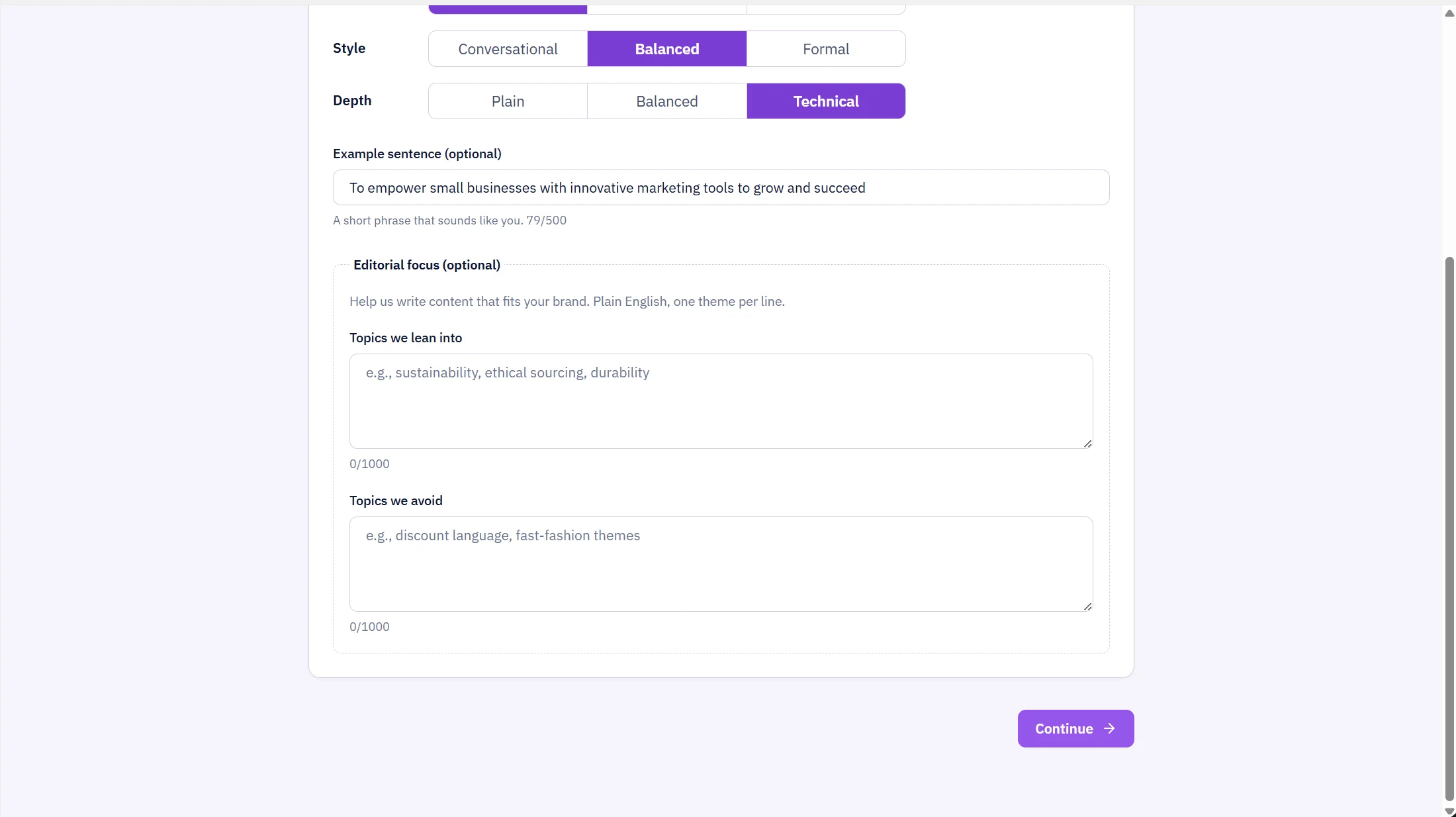
Standard AI writing tools force merchants to write long system prompts or fill in blank text boxes. This leads to decision paralysis and unpredictable output quality. We replaced prompt entry with calibrated editorial axes.
Merchants select their tone (Warm, Neutral, Authoritative), style (Conversational, Balanced, Formal), and technical depth (Plain, Balanced, Technical) using tactile segmented toggles. Each selection immediately updates a live sample sentence demonstrating how the copy will read in practice.
To address the fear of "AI slop," the interface incorporates negative keyword guardrails. Store owners define forbidden terminology, click one-touch tags to exclude discount hype, and blacklist sensitive topics before a single paragraph is drafted.
Direct Catalog Ingestion
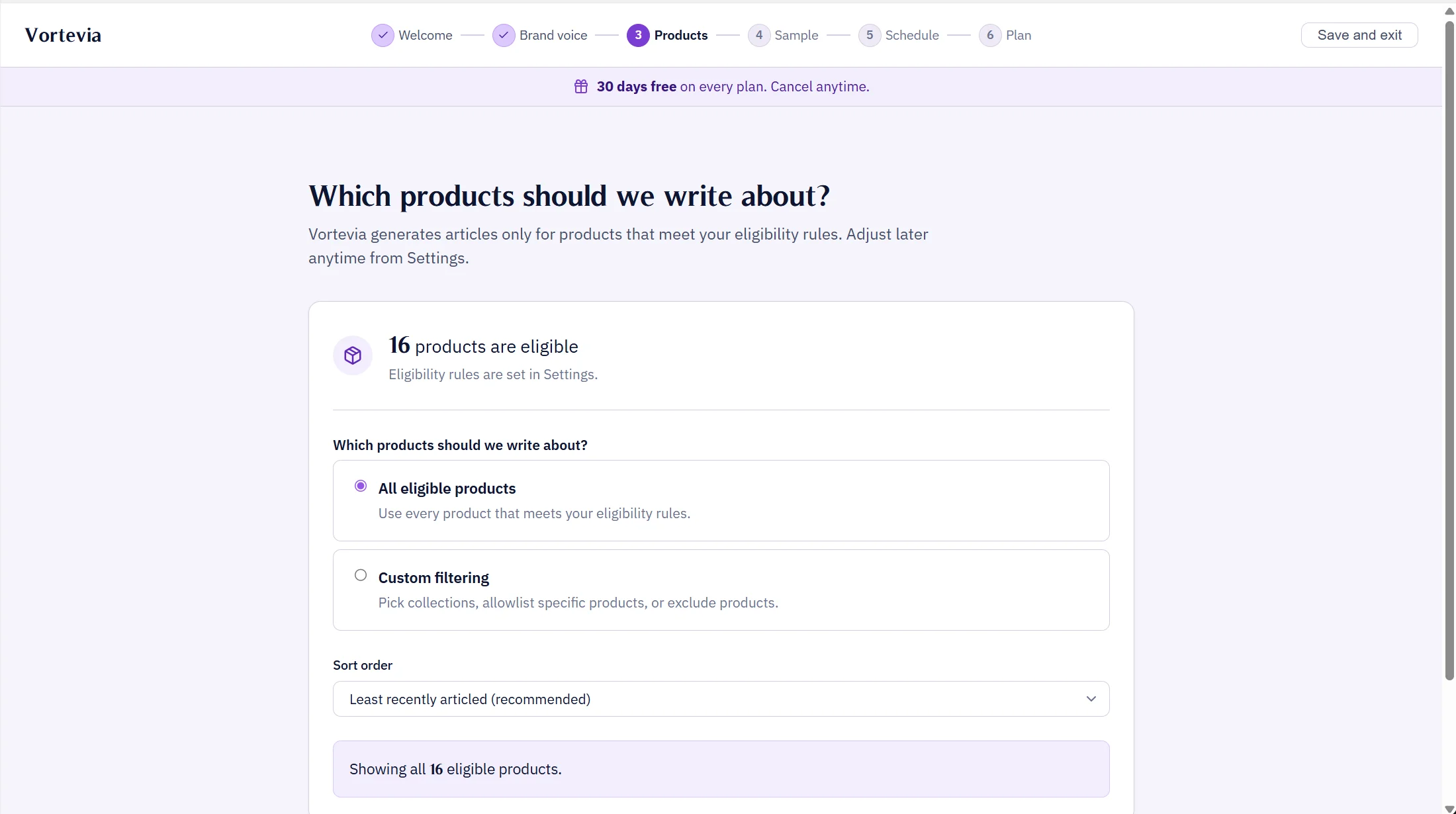
Rather than requiring CSV product uploads or manual URL inputs, Vortevia queries the store's inventory directly via Shopify's GraphQL Admin API during installation. Within seconds of granting permissions, merchants see their exact product counts and collection groupings reflected in real time.
The system establishes intelligent publishing rules: filtering out of stock items, prioritizing high-margin collections, and rotating product mentions on a "Least recently articled" schedule to prevent over-indexing on a single SKU.
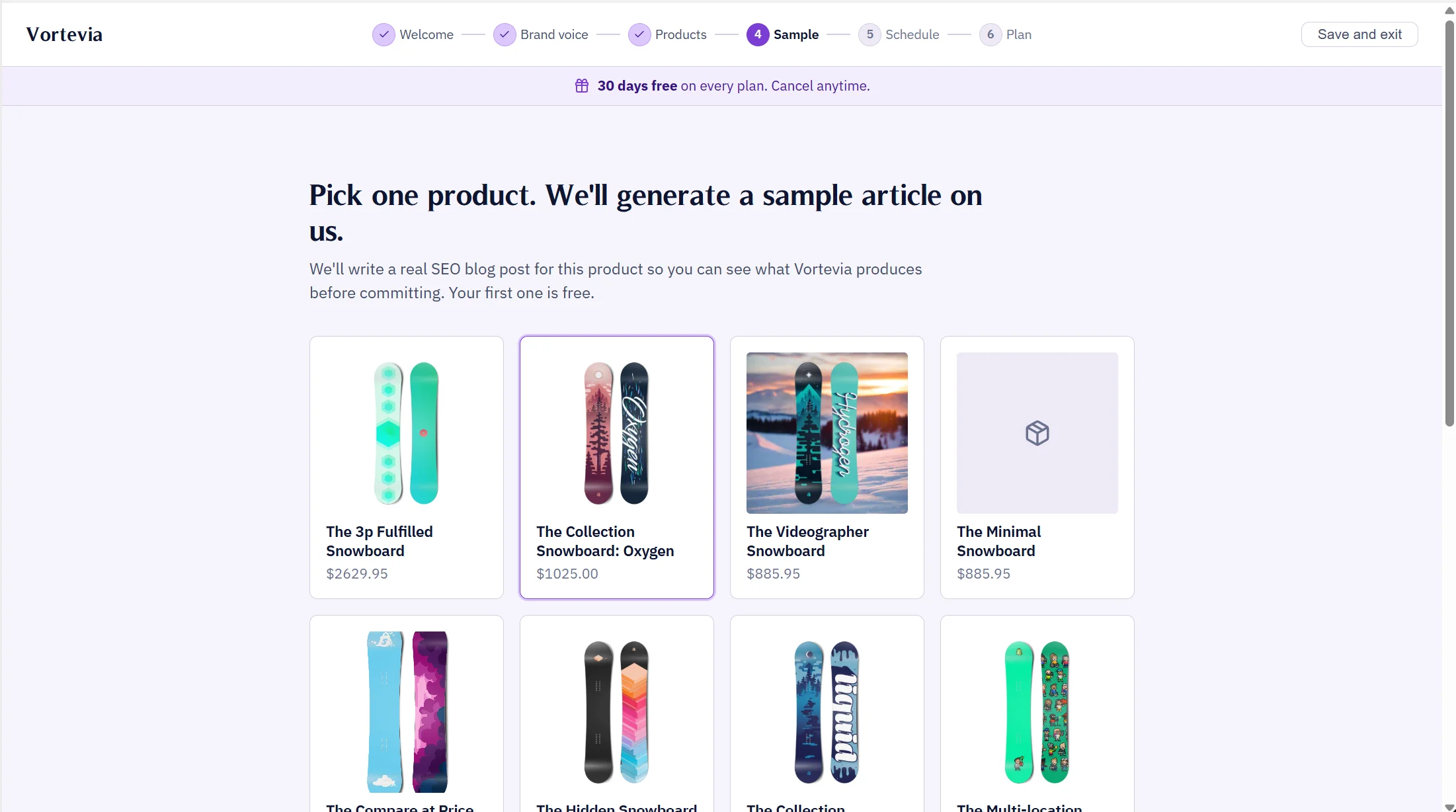
To ground the onboarding in immediate reality, the app presents an interactive inventory picker. The merchant selects one real product from their catalog to generate an instant, 100% free test article.
The Live 6-Stage Pipeline
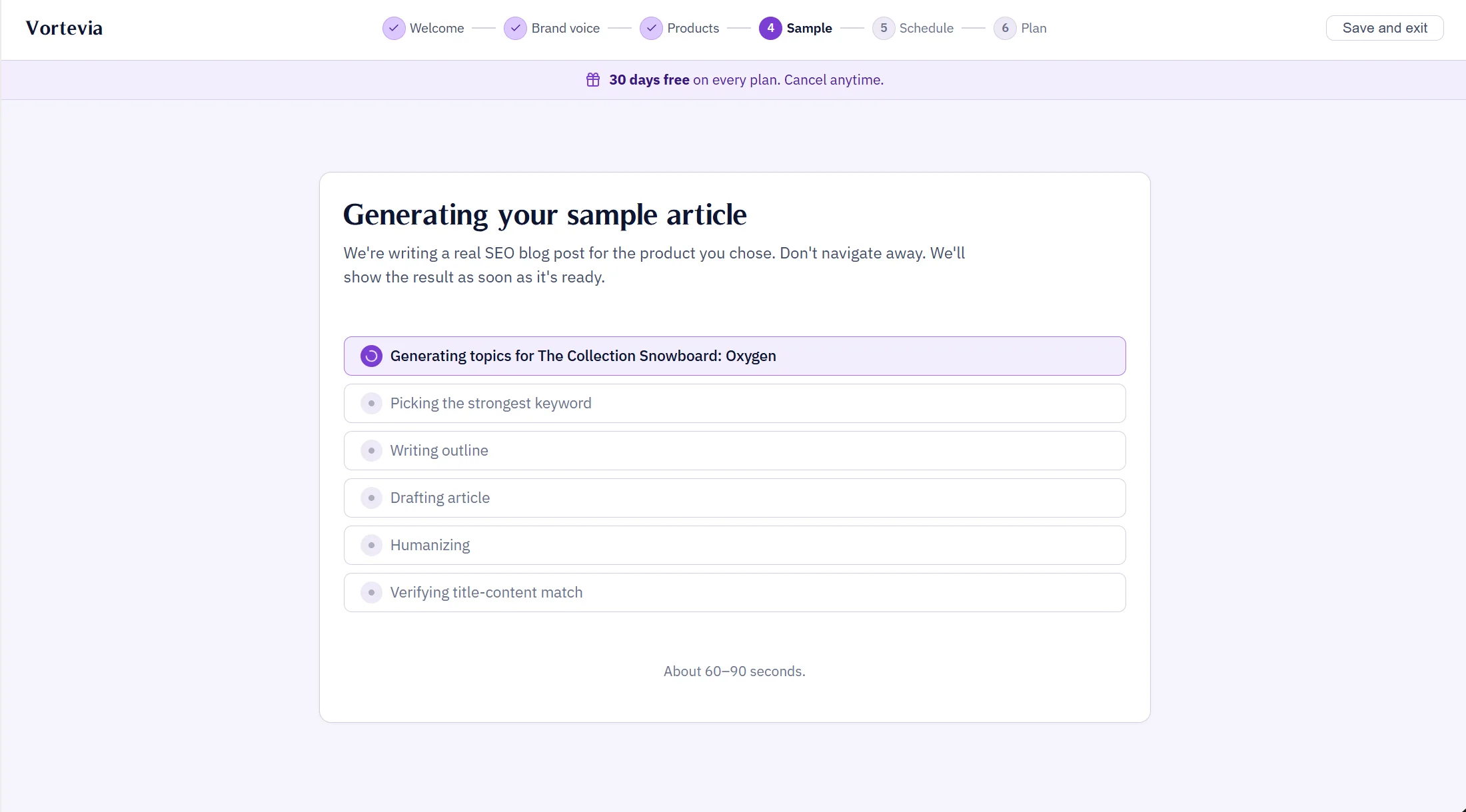
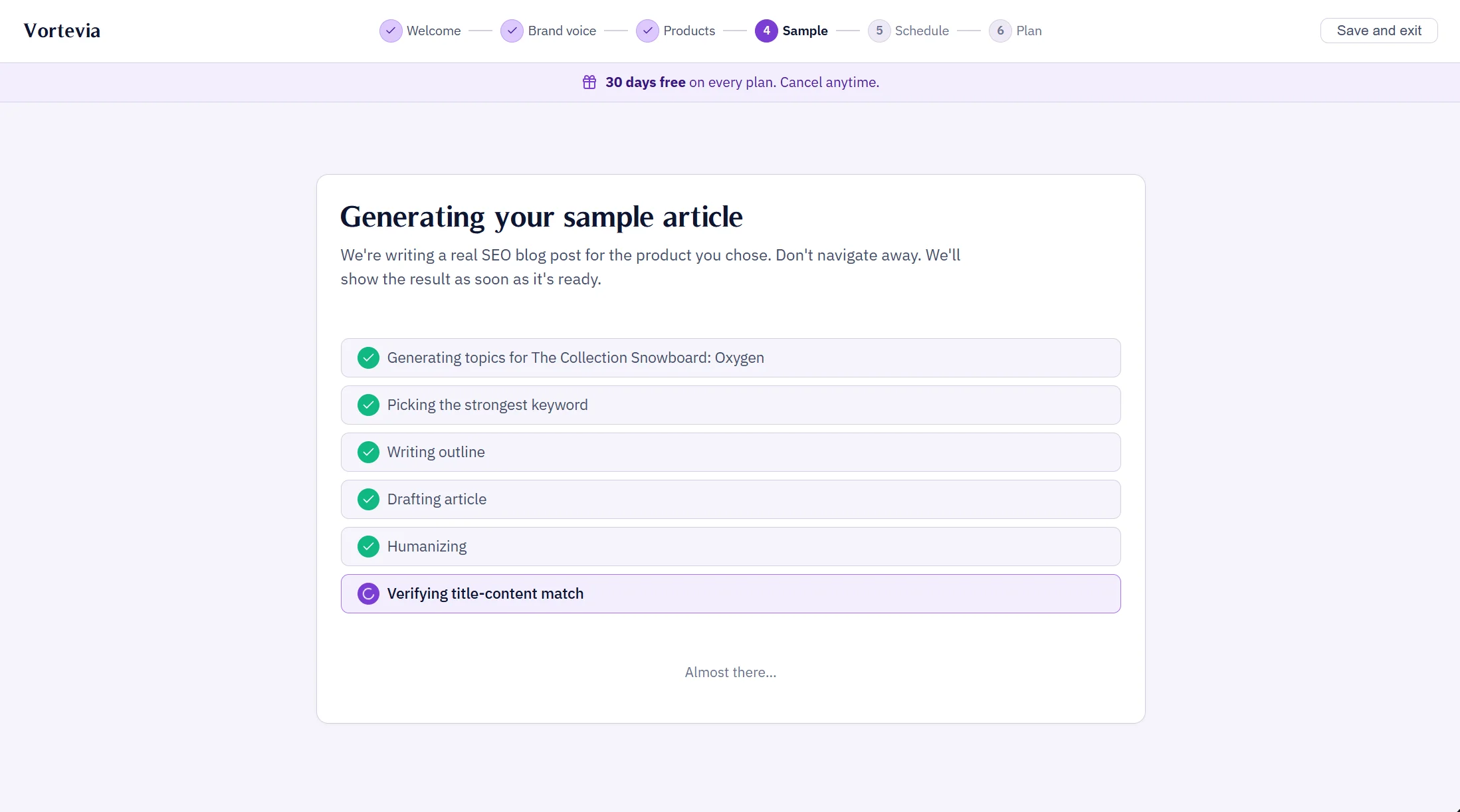
Traditional SaaS loading spinners erode user trust during 60-to-90-second AI generation tasks. Users wonder whether the system has stalled or is simply generating generic ChatGPT filler.
We designed an animated, multi-stage editorial pipeline that visualizes the behind-the-scenes engineering in real time: Topic Discovery, Keyword Clustering, Article Structuring, Draft Generation, Voice Humanization, and Editorial Verification.
As each stage completes, the visual state transitions from a dynamic spinner to a verified checkmark with live timestamp readouts. Watching the engine systematically research commercial search intent and humanize the draft converts merchant skepticism into confidence before the article even loads.
Cadence Math & Autopilot Engine
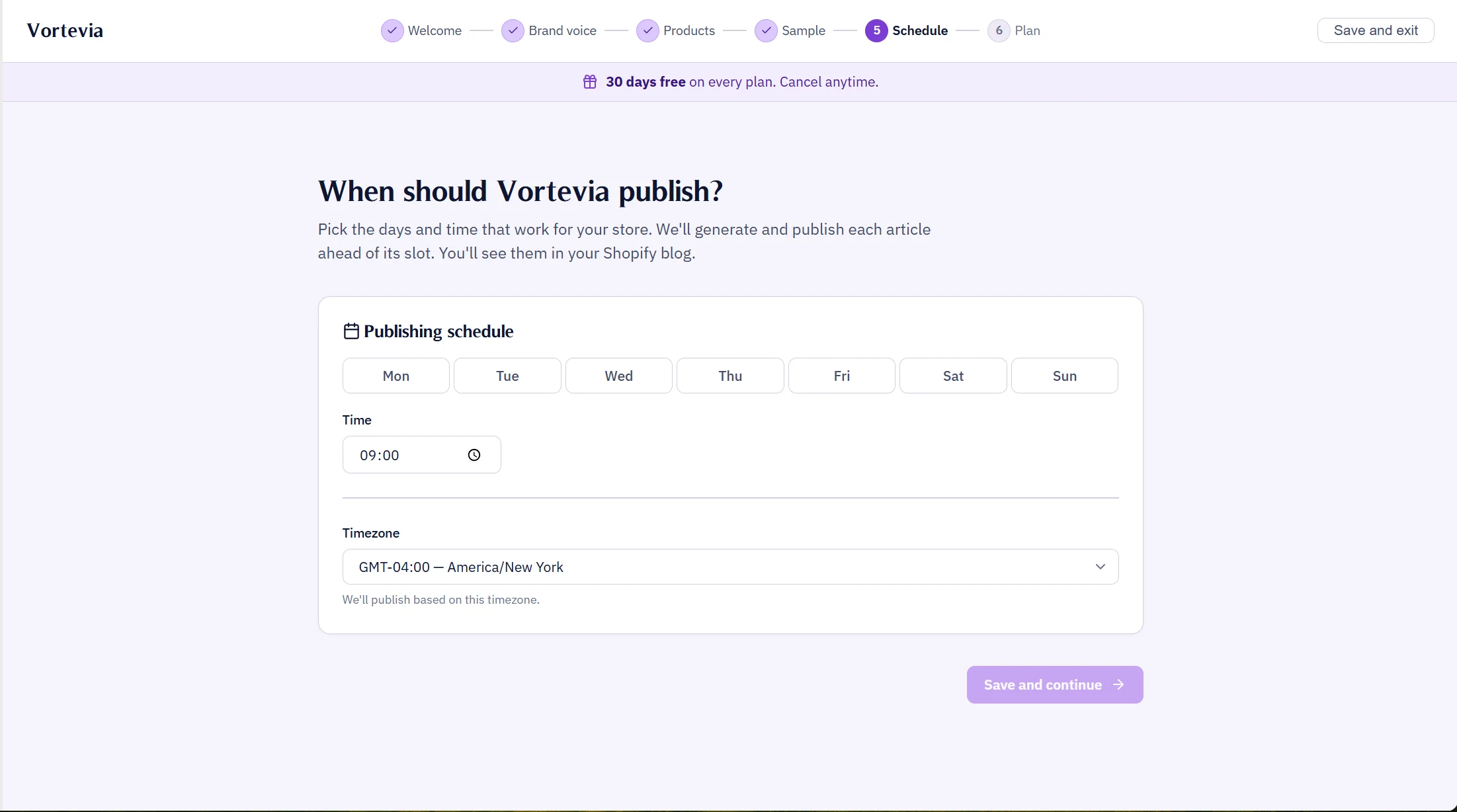
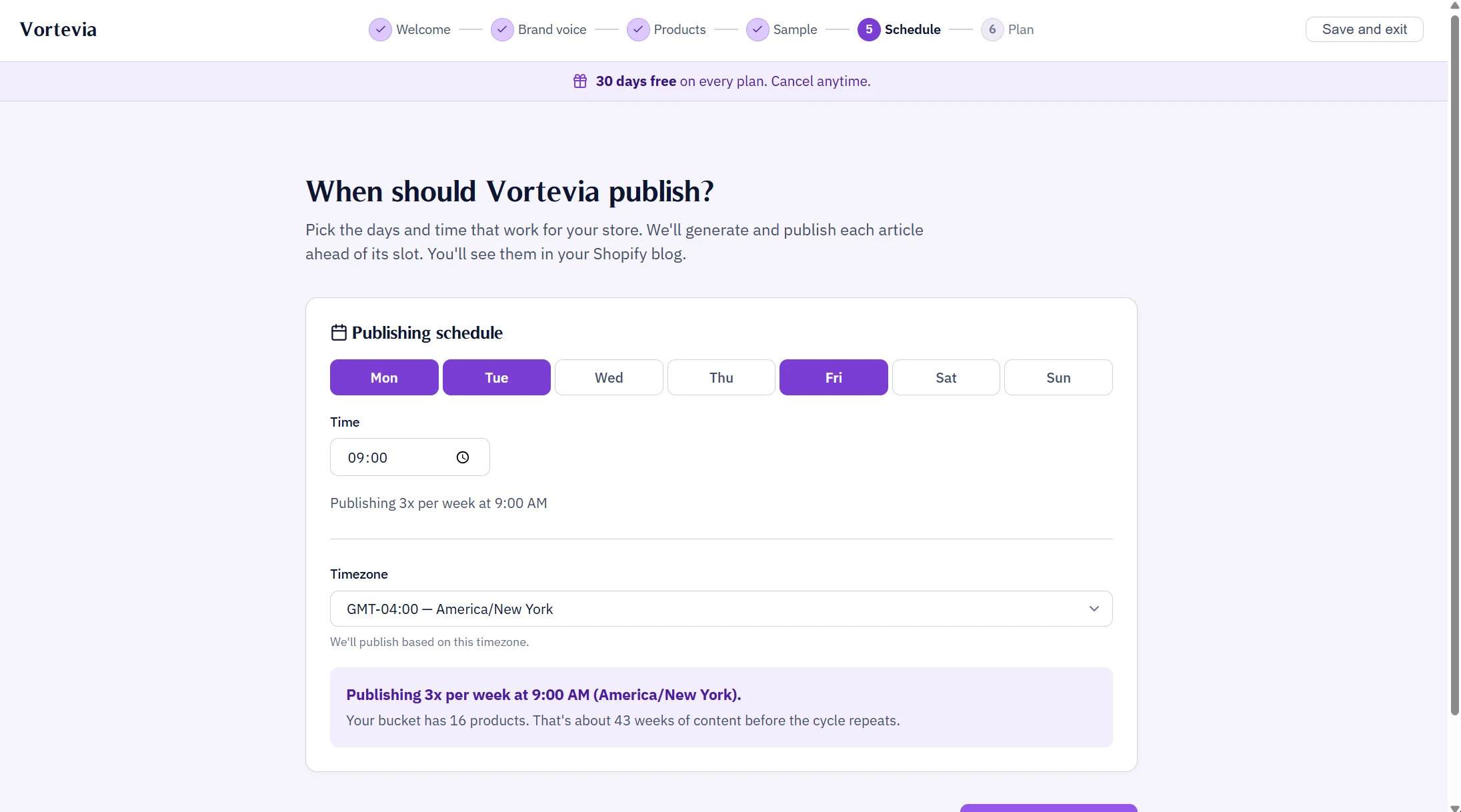
Consistency is the deciding factor in search engine ranking, but most merchants have no idea what publishing frequency matches their inventory size. Vortevia solves this with transparent cadence calculations.
Store owners select their preferred publishing days (e.g., Monday, Wednesday, Friday) and local timezone. As days are toggled, the engine calculates the exact runway: for example, 3 articles per week across 16 eligible products yields 43 continuous weeks of unique search coverage before cycling.
By connecting abstract publishing settings to concrete timeline projections, the app reframes content marketing from an unpredictable chore into an automated, quantifiable growth asset.
Native Billing & High-Intent Activation
Rather than putting up a paywall before the user experiences the product, Vortevia requests payment only after delivering a complete, high-quality sample article written specifically for the merchant's store.
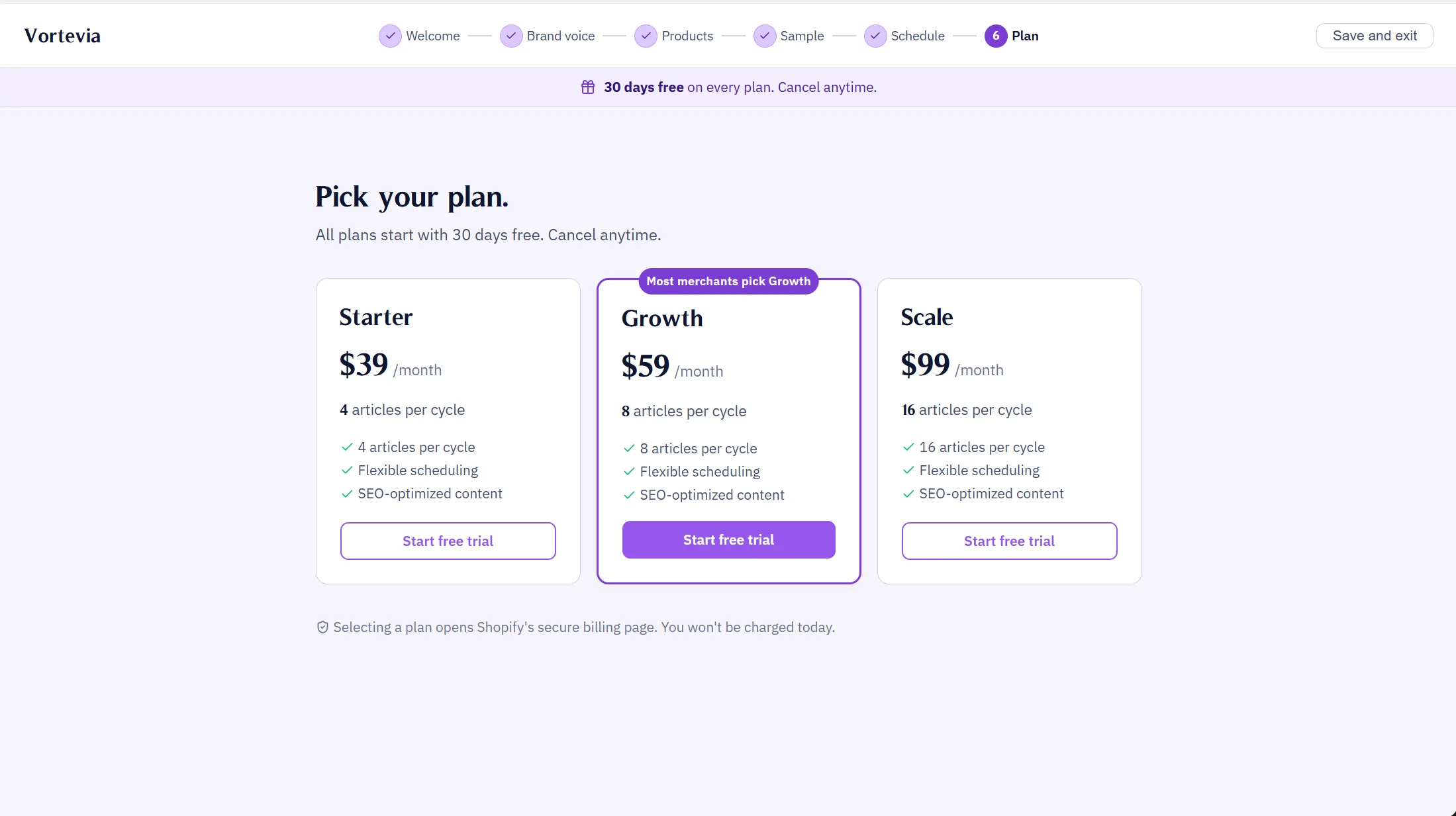
The checkout interface presents three transparent tiers: Starter ($39/mo), Growth ($59/mo), and Scale ($99/mo). Growth is prominently anchored as the choice for multi-cadence publishing. The entire flow connects directly to Shopify's Recurring Application Charges API, allowing merchants to approve subscriptions in a single click through their existing Shopify billing method.
By coupling zero-friction setup, transparent assembly-line proof, and risk-free trial terms, Vortevia achieves rapid time-to-value and predictable recurring revenue.