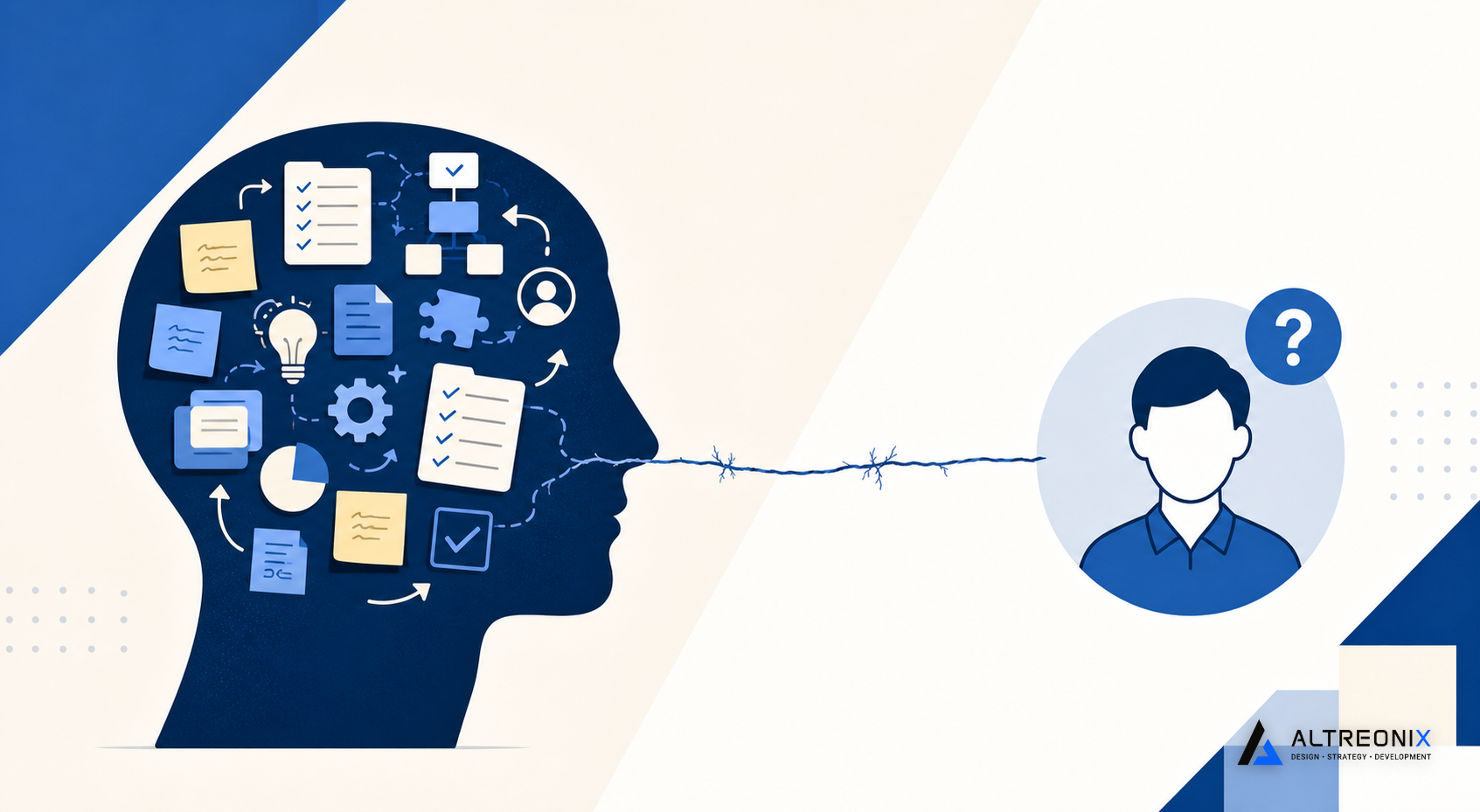
Every growing business has a version of this moment. A new hire starts, and their entire onboarding depends on whichever teammate happens to have time that week. They learn the process by watching, asking questions as they go, and picking up whatever shortcuts and exceptions that teammate has developed over time. It works, sort of, right up until that teammate is out, or leaves, or two new hires start in the same week and there’s only one person who can actually train them.
This is one of the most consistently overlooked gaps in growing operations. Businesses will invest in inventory systems or approval workflows well before they think to formalize onboarding, even though onboarding is often where the most expensive mistakes get made, simply because nobody wrote down the process in a way that survives the person who knows it.
The Real Pain Points of Informal Knowledge Transfer
The problems here are predictable and repeat themselves every time a new hire joins:
- Every new hire needs 1:1 instruction, which means someone experienced has to step away from their own work every time the team grows, and how well the new hire is trained depends entirely on who happened to train them. That’s a real cost even when it’s not tracked anywhere, since it’s time your best people spend re-explaining the same process instead of doing their own job.
- The process is inconsistent across hires. Two people doing the same job can end up with meaningfully different habits, because they learned from different people at different times, each adding their own interpretation along the way. Six months later, nobody’s entirely sure which version is “correct,” because there was never a single documented answer to check against.
- Errors happen from informal knowledge transfer, not because anyone is careless, but because verbal instruction and half-remembered steps naturally lose detail every time they’re passed from one person to the next. What starts as a complete process after two or three rounds of “this is how so-and-so showed me” often loses a step nobody meant to drop.
Onboarding and internal documentation are consistently identified as core operational systems for small businesses, yet they get far less investment than customer-facing tools, largely because the cost of skipping them is invisible until a key person leaves or a mistake traces back to a step nobody wrote down.
Here’s what this actually looks like in practice. A new warehouse hire is trained by whoever’s available that day, and picks up a shortcut for logging received shipments that skips a verification step the “official” process requires. Three weeks later, a discrepancy shows up in inventory counts, and nobody can trace it back to the missing step, because it was never written down as required in the first place. The mistake isn’t the new hire’s fault. It’s the fault of a process that existed only in one person’s head.
What a Proper Onboarding and SOP System Should Actually Do
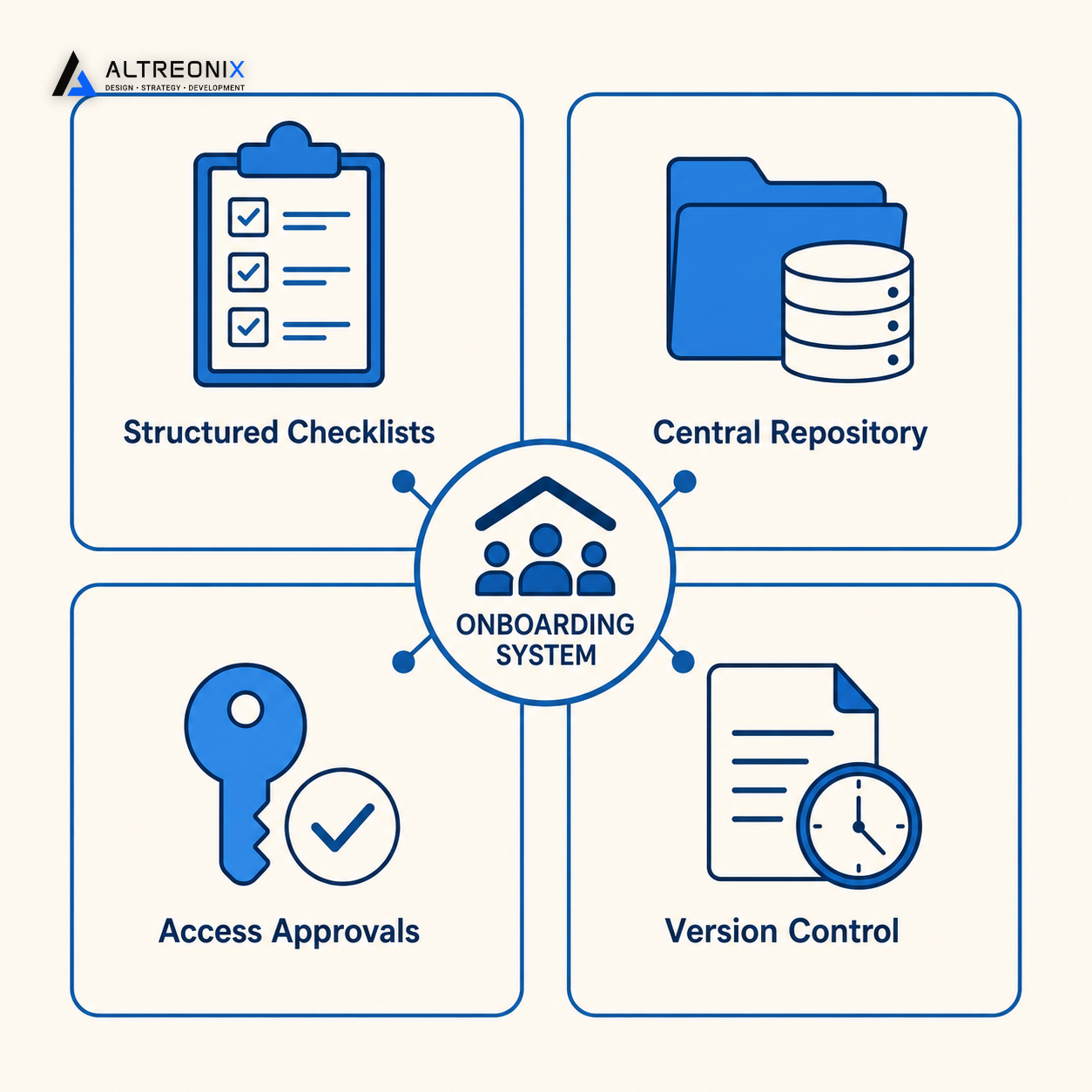
The fix isn’t more documents. Most businesses already have some onboarding material, a Google Doc here, a PDF there, that nobody consistently uses or updates. A proper system does four specific things a folder of documents doesn’t:
| Component | What It Does | What Happens Without It |
|---|---|---|
| Structured checklists | Breaks onboarding into clear, sequential steps for each role | New hires miss steps, or complete them out of order |
| Central repository | Keeps the current version of every SOP in one findable place | People reference outdated copies or ask around instead of checking |
| Access and permission approvals | Ties account and system access to a defined approval step | New hires get access too slowly, or former employees keep it too long |
| Version control | Tracks changes to a process over time, with a record of what changed and when | Nobody’s sure if the “current” process is actually current |
None of this requires enterprise software. It requires treating onboarding as a system with defined steps and ownership, rather than a folder that accumulates documents nobody’s responsible for maintaining.
Turning Documents Into a System, Not Just More Folders
The instinct when onboarding feels chaotic is usually to write more documentation. That rarely fixes the underlying problem, because the issue usually isn’t a lack of documents, it’s a lack of structure connecting them to an actual sequence, an owner, and a way to know which version is current. A folder with fifteen documents in it, several outdated, isn’t more useful than no documentation at all, it just gives people something to misread confidently instead of asking the right person.
Moving from documents to a system doesn’t have to mean a large software purchase. For many teams, a simple internal web app or structured checklist tool that tracks each new hire’s progress against a defined sequence is enough. What matters is that the system, not a person’s memory, dictates what happens next, who’s responsible for each step, and when a piece of access or equipment needs to be requested. The documents themselves don’t disappear, they still contain the actual instructions, but they stop being the thing people have to remember to check and start being something the system surfaces at the right moment automatically.
How Onboarding Connects to Approvals, Equipment, and Training
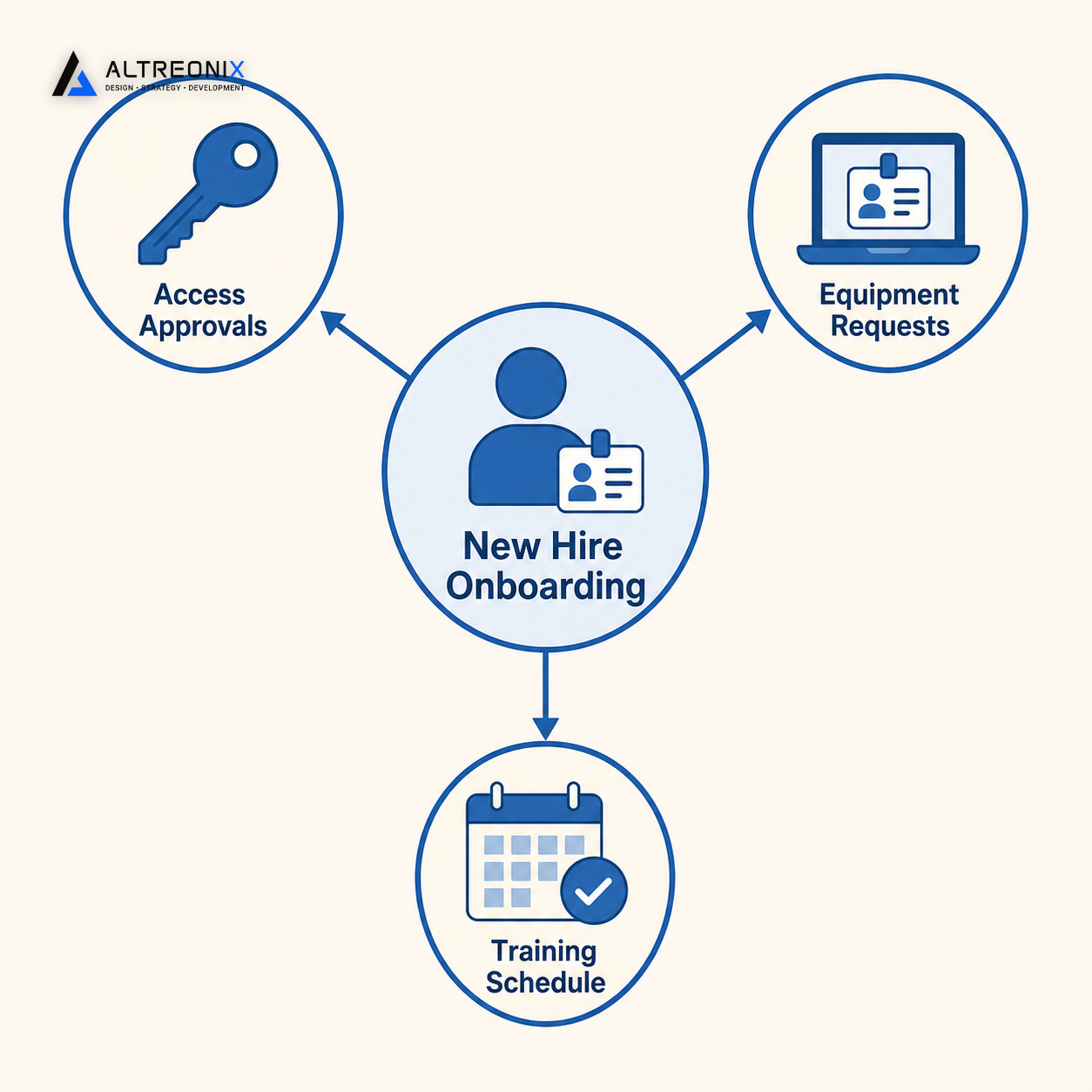
Onboarding rarely functions as a standalone process. A new hire’s system access usually needs sign-off, which means onboarding depends on the same kind of structured approval workflow we’ve covered elsewhere, rather than an email asking IT to “set them up when you get a chance.” Equipment requests, a laptop, a badge, a uniform, follow the same pattern: a task with an owner and a deadline, not a verbal request that’s easy to forget once the new hire’s first day gets busy. Training itself often depends on scheduling and completion tracking that a simple checklist system handles far better than a shared document nobody updates.
Treating onboarding as connected to these other systems, rather than an isolated HR task, is part of why we think about it as one piece of the broader operational systems picture rather than a standalone fix.
Start With One Role: A Minimal Onboarding Flow You Can Build This Month
Trying to formalize onboarding for every role in the business at once is the most common way this stalls. A narrower starting point works better:
- Pick the role you hire for most often. The role with the highest hiring frequency gives you the fastest return on formalizing it, since you’ll use the system again soon, and any gaps you catch early get fixed before they cost you with the next several hires.
- Write down the actual current process, including the shortcuts and exceptions people have quietly adopted, not the idealized version everyone assumes is happening. This step is usually the most revealing part of the whole exercise, since it often surfaces steps that different trainers have been doing differently for months without anyone noticing.
- Turn it into a structured checklist with clear ownership at each step, from access requests to equipment to initial training milestones, so completing a step is a recorded action rather than something the new hire has to just remember they did.
- Run it with the next hire for that role, and use what breaks or gets missed to refine it before extending the same approach to the next role. The first run will surface things the mapping missed, that’s expected, and it’s far cheaper to fix at this stage than after the process has been informally repeated a dozen more times.
If onboarding at your business still depends on whoever happens to be free that week, it’s a good candidate for a focused fix. We offer a SOP and Onboarding Systems Review, where we help you turn one high-impact role’s onboarding into a simple, repeatable system your team can rely on regardless of who’s available. Get in touch here and tell us which role would benefit most from getting this right first.